
Reverse mortgage requirements in Florida come from the federal Home Equity Conversion Mortgage (HECM) program, which is insured by the Federal Housing Administration. The core rules are the same in every state: you generally need to be at least 62, live in the home as your primary residence, have enough equity, complete HUD-approved counseling and show that you can keep paying the property’s taxes, insurance and association costs.
This guide walks through each requirement, explains how the rules apply to Florida homes and condos, and covers the 2026 loan limit. For a broader introduction, see our guides on what a reverse mortgage is and how it works in Florida.
Wondering If You Qualify for a Reverse Mortgage?
Greg Hayden can review your age, home, equity, existing mortgage and monthly property costs, explain HUD counseling, and tell you whether a reverse mortgage or another option may fit.
Reverse Mortgage Requirements at a Glance
| Requirement | What HUD requires |
|---|---|
| Age | For an FHA-insured HECM, the youngest borrower must be at least 62 at closing. |
| Occupancy | The home must be the principal residence of each borrower. It cannot be a vacation home or investment property. |
| Ownership and equity | The borrower holds title to the property and either owns it outright or has paid down a considerable amount of the mortgage. Existing liens are generally paid off with the reverse mortgage at closing. |
| Property | A single-family home, a 2-4 unit home where the borrower lives in one unit, an eligible condominium, or a qualifying manufactured home. All must meet FHA property and flood standards. |
| Counseling | Counseling with a HUD-approved HECM counselor is required before the loan can move forward. |
| Financial assessment | The lender reviews credit history, income, assets and living expenses, and whether the borrower can keep up with property charges. |
| Property charges | The borrower must keep paying property taxes, homeowners and flood insurance, and any condo, HOA or special assessment charges. |
| Federal debt | The borrower cannot be delinquent on any federal debt. |
| Loan limit | The 2026 HECM maximum claim amount is $1,249,125 for FHA case numbers assigned on or after January 1, 2026. |
These summaries come from HUD’s HECM program page and the federal HECM regulations (24 CFR Part 206). Individual lenders can apply additional requirements, and the details of your situation matter. These requirements apply to FHA-insured HECMs, not to proprietary reverse mortgages.
Age: The Youngest Borrower Must Be 62
Under the federal HECM regulations, the youngest borrower must be 62 or older at closing. If a married couple wants a reverse mortgage and one spouse is younger than 62, that spouse may be left off the loan as a non-borrowing spouse. HUD uses an eligible non-borrowing spouse’s age in place of the youngest borrower’s age when it calculates the loan amount, which can reduce the proceeds available. An eligible non-borrowing spouse who meets HUD’s criteria may be able to stay in the home after the borrower’s death, because the due date is deferred in that case. Because this affects both the amount and the protections for the spouse, review it with your lender before you apply.
This guide focuses on FHA-insured HECMs. Proprietary reverse mortgages, sometimes called portfolio reverse mortgages, are not FHA-insured and may have different age requirements, property rules and limits. Some have lower minimum ages depending on the lender, product and state, so ask a lender which type of loan you are being offered.
The Home Must Be Your Principal Residence
A HECM is for the home you actually live in. The property must be the principal residence of each borrower, so a Florida vacation home, second home or rental does not qualify. The occupancy requirement continues after closing: the loan can become due if the home stops being your principal residence, and HUD’s rules also address a borrower who is away from the home for more than 12 consecutive months because of physical or mental illness.
Ownership and Equity
You must hold title to the property, and HUD describes the program as being for borrowers who own the home outright or have paid down a considerable amount of the mortgage. If you still owe money, the reverse mortgage generally has to pay off the existing mortgage and other liens at closing, which reduces the cash left for you. How much you can borrow depends on your age, the home’s value, current interest rates and the HECM limit, so equity alone does not determine the amount.
Eligible Properties in Florida
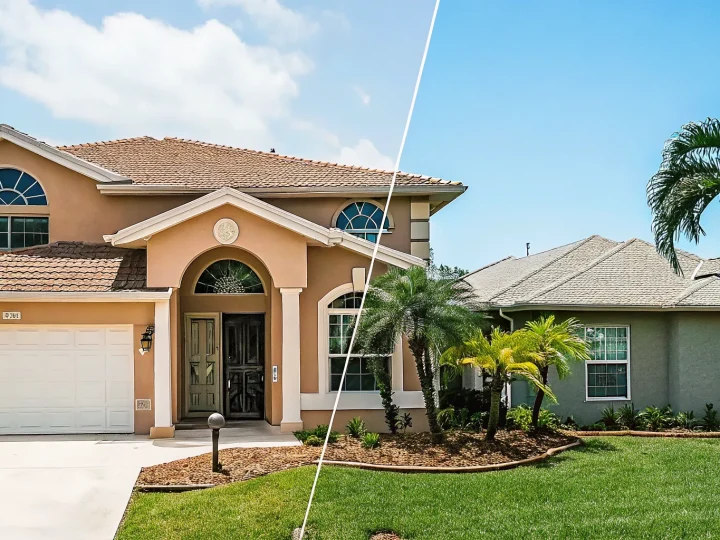
HUD lists single-family homes, 2-4 unit homes where the borrower occupies one unit, HUD-approved condominium projects, qualifying individual condominium units and qualifying manufactured homes. The property must meet FHA property and flood standards.
In Florida, condos deserve extra attention. Many owners ask about reverse mortgages because of rising association costs and special assessments, but the condominium project or unit must be eligible, and unpaid assessments and association charges still have to be paid by the borrower. Our guide to reverse mortgages for South Florida condo owners explains what to review early. Homes in flood zones also need to meet FHA flood standards, and Florida homeowners insurance costs can matter, which is covered below.
HUD-Approved Counseling Is Required
Before a HECM can move forward, you must meet with a HUD-approved HECM counselor. The regulations also require counseling for any eligible or ineligible non-borrowing spouse and any non-borrowing owner. The counselor provides a certificate of completion that the lender needs to receive. Counseling is meant to help you understand the costs, your obligations and the alternatives. You can find a counselor through HUD’s housing counselor search or by calling HUD at 800-569-4287.
The Financial Assessment
A reverse mortgage does not require monthly principal-and-interest payments, but it is not approved on age and equity alone. The lender must assess your financial capacity to comply with the terms of the loan. That review includes your credit history, your cash flow and residual income, and your record of paying property taxes and insurance. If your credit history or cash flow does not meet the lender’s criteria, the lender must consider and document extenuating circumstances or compensating factors.
Depending on the results, the lender may require a life expectancy set-aside, often called a LESA. A LESA withholds part of your loan proceeds to pay property taxes and insurance, which means less cash available to you. Ask your lender early whether a set-aside is likely in your case.
Property Taxes, Insurance and Association Costs Still Apply
Under HUD’s rules, property charges include property taxes, hazard insurance, flood insurance where applicable, ground rents, condominium fees, planned unit development and homeowners’ association fees, and special assessments levied by a municipality or under state law. The borrower is responsible for keeping these current, directly or through a set-aside. Failing to pay property charges is one of the events that can make the loan due and payable, so a realistic monthly and annual budget matters. In Florida, homeowners and flood insurance premiums can be significant, so request current quotes before you decide.
The 2026 HECM Limit
HUD’s Mortgagee Letter 2025-22 set the 2026 HECM maximum claim amount at $1,249,125 for FHA case numbers assigned on or after January 1, 2026. It is the same limit nationwide. The maximum claim amount is the most home value HUD counts in the calculation, so a home worth more than the limit does not produce a larger loan. Your actual loan amount depends on the age of the youngest borrower or eligible non-borrowing spouse, the interest rate, and the lesser of your home’s appraised value or the limit. You can read the letter on HUD’s website.
What a HECM Costs
HUD’s HECM page lists an initial mortgage insurance premium of 2% charged at closing and an annual premium of 0.5% of the outstanding loan balance, and notes that the premium can be financed into the loan. A reverse mortgage also has an interest rate and typically other closing, servicing and origination costs, and interest and fees are added to the balance over time, according to the Consumer Financial Protection Bureau. That is why the loan balance generally grows and home equity shrinks over time. See our guide to reverse mortgage pros and cons in Florida for the tradeoffs.
When the Loan Becomes Due
You do not make required monthly mortgage payments, but the loan must eventually be repaid. Under the federal regulations, the loan can become due and payable when the last surviving borrower dies or no longer lives in the home as a principal residence, when the borrower sells or transfers title, when the borrower fails to pay property charges, or when the borrower does not meet another obligation under the mortgage. The CFPB notes that the loan is typically repaid by selling the home. Families should understand these triggers in advance.
Typical Steps to Apply
- Review your goals and numbers with a mortgage professional: age, home value, existing mortgage, property costs and alternatives.
- Complete HUD-approved counseling and get your certificate.
- Apply and complete the financial assessment, including credit, income, assets and property-charge history.
- Order the appraisal and review the property, including condo or flood requirements where they apply.
- Review the final terms and close. The CFPB says most reverse mortgages carry a three-business-day right to cancel after closing.
If you are comparing a reverse mortgage with buying a new home, see our guide to HECM for Purchase in Florida. You can also visit our main reverse mortgage page.
Frequently Asked Questions About Florida Reverse Mortgage Requirements
Is there a minimum income requirement for a reverse mortgage?
HUD does not set a simple minimum income. Instead, the lender completes a financial assessment that looks at your credit history, income, assets, living expenses and your ability to pay property taxes, insurance and association costs. Depending on the results, a set-aside may be required.
Can I get a reverse mortgage if I still have a mortgage?
Often, yes, if you have enough equity. The reverse mortgage generally pays off the existing mortgage and other liens at closing, and the remaining proceeds are what you can receive. Whether it works depends on your balance, your home value, your age and current rates.
Can I get a reverse mortgage on a Florida condo?
Possibly. HUD lists HUD-approved condominium projects and qualifying individual condo units as eligible, and the property must meet FHA standards. Condo approval, special assessments and association costs can affect eligibility, so check early.
What if my spouse is younger than 62?
The youngest borrower must be 62 or older, so a younger spouse typically cannot be a borrower. A younger spouse can be a non-borrowing spouse, and HUD uses an eligible non-borrowing spouse’s age when calculating the loan amount. Talk through the spouse’s situation with your lender before applying.
Do I still pay property taxes and homeowners insurance?
Yes. The borrower remains responsible for property taxes, hazard and flood insurance, and condo, HOA or special assessment charges, either directly or through a set-aside. Failing to keep them current can cause the loan to become due and payable.
Is reverse mortgage counseling required?
Yes. A HUD-approved HECM counselor must provide counseling, and a certificate of completion is required. Counseling is also required for eligible and ineligible non-borrowing spouses and non-borrowing owners.
Talk Through Reverse Mortgage Requirements With Greg Hayden
Bring your home details, any existing mortgage balance and your estimated taxes, insurance and association costs. A quick review can show whether a reverse mortgage may fit before you start counseling.
Program rules were checked against HUD’s HECM guidance, Mortgagee Letter 2025-22, the federal HECM regulations (24 CFR Part 206) and the Consumer Financial Protection Bureau in October 2026 and can change. Reverse mortgage eligibility, costs and availability vary by lender and scenario. This article is for general education and is not a rate quote, loan approval, financial advice or commitment to lend. A reverse mortgage is a loan that must be repaid. Mortgages Done Right Inc. NMLS #1532755. Greg Hayden NMLS #332209.