USDA Loans Florida: Eligibility and Rural Basics
Homebuyers in rural Florida can skip the down payment by using a federal loan program. This option helps families move into homes with no money down in many local counties. You can find eligible areas outside the major city centers in the Sunshine State.
USDA loans Florida residents use are part of a federal program that makes homeownership easy in rural areas. This mortgage option allows you to buy a home with no down payment if the property is in a rural zone. To qualify, your household income must stay within the limits set for your specific county. These loans are backed by the government to help build strong local towns. You must plan to live in the home as your primary residence to qualify. According to the USDA Rural Development office, this program helps many households buy or build a home in Florida. It is a vital tool for those who lack the funds for a large down payment today.
Many people think they need a large cash deposit to buy a Florida home. The rural development program offers a way to move in with zero money down. Learning how USDA loans Florida borrowers use zero-down financing can help you reach your goals. Here is how
How USDA loans Florida borrowers use zero-down financing
The United States Department of Agriculture (USDA) offers a path to own a home for many people in the Sunshine State. Through the Section 502 Guaranteed Loan Program, buyers can get 100% financing to buy, build, or fix a home. This zero-down choice makes it much easier for families with low or middle income to move into their own space without a large cash gift.
How the zero-down perk works
Most home loans need you to pay at least a small part of the price at the start. But USDA loans are not like that because the state backs the debt. This gives lenders more trust, which lets them offer 100% financing options to buyers who qualify. You may still have to pay for closing costs, but the down payment can be zero.
Because these loans help create strong rural areas, the rules favor people who plan to live in the home as their main place to stay. If you are a U.S. citizen or a qualified alien, you may use this plan to get a home soon. Working with a pro can help you see if you meet the credit and income rules for the year.
Finding rural areas in Florida
To use this zero-down loan, the house you want must sit in an area that the USDA calls rural. Many parts of Florida outside big cities like Miami or Fort Lauderdale fit this. You can use the USDA Rural Development site to search for a house or view maps of areas in your county.
Even if you think a spot is too busy to be rural, it might still fit based on current USDA maps. These maps change now and then, so checking the latest data is a smart first step. If you find a home in a zone that fits, you have passed one of the big tests for these first-time home buyer programs in our state.
Income limits and home rules
The USDA wants to help families who need it most, so they set caps on how much money your home can make. Your total income cannot be more than 115% of the median income for the area where you want to buy. This rule makes sure the plan stays focused on helping people who might struggle to save for a big down payment while they pay for life costs.
Lenders also look at your debt and credit to make sure you can pay back the loan. While these rules are often more easy than other loan types, you still need to show you can handle costs each month. Getting a clear view of your money before you start will help you move fast when you find the right home.
If you are organizing a purchase from the ground up, review these eight steps to buying your first home before you compare eligible properties. The checklist can help you coordinate financing, inspections, and closing tasks without losing sight of USDA location rules.
What areas qualify for a USDA loan in Florida?
To get a USDA loan in Florida, the house you want to buy must sit in a rural area. The United States Department of Agriculture defines what “rural” means for this program. Many people think this only means far-off farms or deep woods. But the USDA map often includes small towns and many suburban spots too. In Florida, this means large parts of counties like St. Lucie or Polk are open for these loans.
Rural and suburban area rules
The goal of the Section 502 Guaranteed Loan Program is to help build strong rural spots. To do this, the program lets you buy a home with no money down. This helps people who have low or mid-range pay. Most of Florida’s land qualifies as rural by USDA standards. Big cities like Miami or Orlando do not qualify. But many towns just outside those cities are on the list.
For example, spots in the Florida Panhandle or Central Florida often have many eligible homes. These areas offer the same 100% financing options as more remote land. This makes it easier for people to buy a home without saving for years. The rules focus on helping you find a place where people can live and work for a long time.
How the USDA map works
You should not guess if a house is in a good spot. The USDA has a tool you can use to check. You can go to the USDA Rural Development Eligibility Site to search. There, you type in a specific street address. The site will tell you right away if the house is eligible. You can also look at a map of your whole county.
This helps you find new neighborhoods where you can use a USDA loan. Keep in mind that maps can change over time. Always check the map before you put in an offer. You might find that a home just a few miles away qualifies when the first one did not. This tool is the best way to be sure about the location before you apply for the loan.
Eligible property standards
Buying in a USDA spot can save you a lot of cash up front. Because these are first-time home buyer programs, they help new owners start. You do not need a big down payment to close the deal. The home must be your main house where you live all year. It cannot be a farm that makes money or a vacation spot.
The house also needs to be safe and in good shape. It must be a modest home that fits the area. The goal is to give you a decent place to live. Our team can show you how to find these homes. Expert guidance can help you find a spot that meets all these rules and fits your budget.
How household income affects USDA eligibility
A practical way to prepare is to list income for every household member before requesting a prequalification. For example, two applicants may be responsible for repaying the mortgage, while another working adult in the home may still affect household-income eligibility. That distinction can change the result even when the proposed monthly payment looks manageable. Final eligibility depends on current USDA program rules, the property address, household size, and lender underwriting.
To get a USDA loan, you must show that your household makes a certain amount of money. This rule ensures the program helps people who need it most. One common point of doubt for buyers is the difference between who is on the loan and whose income counts toward the limit. For 100% financing options like these, the USDA looks at everyone living in the home.
Who counts as a household member?
The USDA adds up the pay for every adult who will live in the house. This includes people who are not listed on the mortgage note. For example, if you and a partner move in together, both paychecks matter. Even if your partner is not a borrower, their earnings go toward the total.
This total must stay under the limit set for your specific area in Florida. You may also need to report income from children over 18 who work. If an older child lives at home and has a job, their wages count toward the household total. But full-time students may have some of their earnings left out.
It is vital to list every person who will live in the home to avoid issues during the review. A mortgage advisor can help you find which wages to include and which to leave out.
Total income versus repayment income
The USDA uses two different income tests for their loans. The first test looks at your eligibility. This test adds up every dollar earned by all residents to see if you qualify for the program. The income for the Section 502 program cannot exceed 115% of the median household income for the area.
This number varies by county and by how many people live in your home. The second test is for your ability to pay back the loan. For this check, the lender only looks at the income of the people who are actually on the loan. If your spouse is not a borrower, their money helps you stay under the program cap.
But it does not help you qualify for a higher loan amount. This split makes it easier for some families to get a home but harder for others to buy a big property. Income limits are not the same across all of Florida.
Checking the limits for your Florida home
A rural area near a big city might have a higher cap than a more remote county. The USDA updates these numbers often to match the local cost of living. You should check the current limits for your specific county before you start your home search. Large families often have higher caps because they have more costs.
Working with a broker can help you make sense of these rules. Since the USDA has many steps, having a guide is a smart move. An expert can look at your pay stubs and tax forms to give you a clear answer. This step saves you time and helps you feel sure about your path to owning a home.
You can find out if first-time home buyer programs fit your needs and your budget. We can help you check your numbers and find a house in an eligible area.
USDA income limits, fees and eligibility tools for Florida
Because USDA income limits and fees are updated from time to time, this section summarizes the figures USDA published for its guaranteed loan program most recently as of October 2026. Always confirm current numbers with USDA and your lender before you rely on them for a specific home.
Moderate-income limits for the guaranteed loan
USDA’s FY 2026 adjusted income limits for the guaranteed program (the “moderate income” column, in a table dated July 2026) include the following amounts for these Florida areas. The limit applies to total annual household income, not only to the borrowers on the loan.
| Area | 1–4 person household | 5–8 person household |
|---|---|---|
| Palm Beach County (West Palm Beach–Boca Raton area) | $147,800 | $195,100 |
| Broward County (Fort Lauderdale area) | $145,750 | $192,400 |
| Miami-Dade County (Miami–Kendall area) | $156,650 | $206,850 |
| Monroe County (Florida Keys) | $164,800 | $217,550 |
| Martin, St. Lucie and Okeechobee counties (statewide level) | $122,800 | $162,100 |
| Orlando–Kissimmee–Sanford area | $132,100 | $174,400 |
| Tampa–St. Petersburg–Clearwater area | $131,900 | $174,150 |
| Jacksonville area | $125,000 | $165,000 |
For households larger than eight people, USDA adds 8% of the four-person limit for each additional person. Other Florida counties not listed here may fall under different metro or statewide figures, so check the county where you plan to buy.
These limits are not simply a flat 115% of one county’s median income. USDA sets the moderate-income limit using the greater of several measures, including 115% of U.S. median family income and a calculation based on the area’s low-income limit, which is why nearby counties can have different caps and why the published table is the better reference than a percentage rule of thumb.
USDA guarantee fees
USDA’s January 2026 program overview for the guaranteed loan lists an upfront guarantee fee of 1% of the loan amount, an annual fee of 0.35% based on the average scheduled unpaid principal balance, and a $25 technology fee. USDA can change these fees, and the exact charges and how they appear in your payment depend on your loan estimate, so ask your lender for current figures before you compare USDA with FHA, VA or conventional financing.
Official tools for checking a home and your income
Before you make an offer, it helps to verify both the property and the household numbers directly with USDA:
- USDA property eligibility map: enter an address to see whether the location is in an eligible area. The map can change over time, so check it early and again before contract.
- USDA income eligibility tool: look up the current limit by state, county and household size.
- USDA eligibility guide for the guaranteed program: USDA’s own summary of borrower and property requirements.
On the property side, USDA’s program page lists eligible homes as detached and attached single-family homes, condominiums, planned unit developments, modular homes and manufactured homes that meet program standards. Income-producing properties are not eligible, and the home must be your primary residence. On the borrower side, USDA states there is no program minimum credit score, although individual lenders set their own credit requirements, and applicants must be U.S. citizens, U.S. non-citizen nationals or qualified aliens. Loans are 30-year fixed-rate mortgages.
Last reviewed October 2026 against USDA Rural Development materials. If you want help checking a specific address and household size, start a USDA eligibility review with Mortgages Done Right Inc.
USDA occupancy and property rules to understand
The USDA loan program helps people buy homes in rural parts of the country. For those looking at USDA loans Florida has many areas that fit this path. You must follow strict rules about how you use the home and what kind of shape the house is in. These rules make sure the program helps families who need a stable place to live.
Home use rules
The first rule is that you must live in the house as your main home. You cannot use these loans to buy a vacation home or a rental place. The USDA wants you to move into the home within a set time after you close the loan. This rule helps the program focus on people who want to build a life in rural towns.
You must also meet certain legal rules. You need to be a U.S. citizen or have legal status to get a USDA backed loan. The goal is to keep rural areas strong by helping people own the homes where they live. If you plan to move out soon, this loan may not be the right choice for you.
The shape of the house
The house itself must meet high standards for safety and health. It should be clean and safe before the loan can go through. This means the roof, heat, and water systems must work well. If a home needs big repairs, it might not fit the rules unless you plan to fix it with the loan funds.
USDA loans work well for simple homes that fit the local area. They do not usually cover homes with extra features like a pool. The focus stays on basic, safe housing for families. If you are a first buyer, you might also look at other 100% financing options to see what fits your needs best.
| Feature | Backed Loan | Direct Loan |
|---|---|---|
| Income Limit | Up to 115% of area median | Low or very low pay |
| Down Payment | Zero money down | Zero money down |
| Who Funds It | Banks and private lenders | The USDA funds it directly |
| Main Goal | Moderate pay families | Very low pay families |
| Payment Help | No direct help with costs | Grants can lower payments |
The rural area map
Not every home in Florida will fit the rules for this loan. The house must be in a rural area as set by the government. You can check a house on the USDA site to see if it counts. Most of the land in Florida is rural, but big cities and their suburbs often do not make the cut.
The income rules are also part of the home choice. Your pay cannot be more than 115% of the median pay for the area. You must choose a home you can afford within those limits. This keeps the program fair for everyone. Working with an expert can help you find a home that meets both the USDA rules and your own goals.
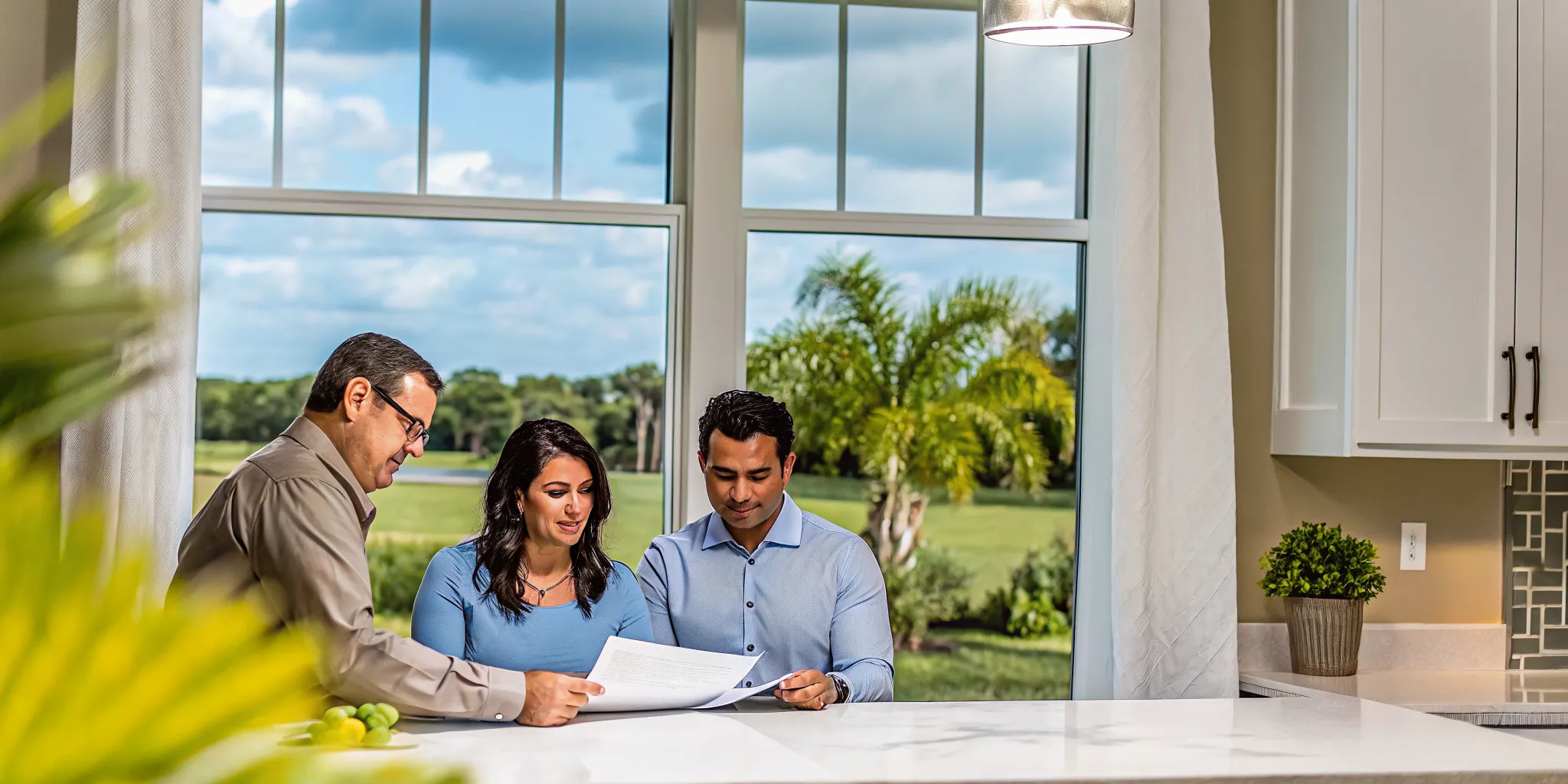
How to apply for a USDA loan in Florida
Getting a home loan through the USDA is a great way to buy a house with no money down. In Florida, these loans help many families move into rural or suburban areas. The path to a new home starts with a clear plan and the right team to guide you. Here is the step-by-step sequence to help you through the USDA loan process.
Find an approved lender
Your first step is to talk to a lender who knows how to handle 100% financing options. The USDA Section 502 Guaranteed Loan Program works through private banks and mortgage brokers. You should look for a team that can help you understand your options and check if you qualify early on.
Check your eligibility
Before you look at homes, you must see if you meet the program rules. The USDA has limits on how much your household can earn. In most cases, your income cannot exceed 115% of the median pay for your area. You must also be a U.S. citizen, a non-citizen national, or a qualified alien to get a loan. This check helps you know your budget before you start your search.
The USDA loan sequence
- Get a pre-approval: Talk to your broker to see how much you can borrow. They will look at your credit and pay to give you a letter that shows you are ready to buy.
- Search for a home: Look for a house in an area that the USDA says is rural. You can use the USDA site to check an address. The home must also be your primary residence.
- Make an offer: Once you find the right place, work with your agent to set a price. If the seller agrees, you will sign a contract.
- Order a home appraisal: A pro will check the home to make sure it meets safety and value rules. This step is a must for all USDA loans in Florida.
- Underwriting review: Your lender will check all your paperwork one last time. They look at your bank files, pay stubs, and the home report.
- USDA final approval: After the bank says yes, the file goes to the USDA for a final stamp. This can take a few extra days, so stay in touch with your broker.
- Close on your home: Sign your final papers and get your keys. You can often roll your closing costs into the loan if the home value is high enough.
Check the property area
The house you buy must be in a spot that fits the USDA rural map. Florida has many large areas that qualify, even near cities. You can find these areas by searching a specific address on the USDA site. This is a vital part of first-time home buyer programs that aim to help people move into quiet communities.
Final underwriting and closing
Once you have a contract, the file goes through a deep check. The lender makes sure your debt is low enough and your work is stable. After they finish, the USDA office does its own review to back the loan. When you reach the end, you will sign the documents and move into your new Florida home.
Is a USDA loan right for your Florida home purchase?
Choosing if a USDA loan fits your Florida home search depends on a few key facts. This program helps people buy homes with no money down. It is a big win for many buyers who want to save cash. But the loan is not for every house or every person. You must look at where you want to live and how much you earn. Working with an expert can help you see if this path fits your money plan.
Check your home place
The first rule for 100% financing options through the USDA is the home place. The house must be in a rural area. This program helps grow rural towns and small cities. In South Florida, you can find homes in parts of St. Lucie or Palm Beach County that fit. You can check any house on the USDA site to see if it qualifies. If a home is in a big city, it likely will not work for this loan.
Buying a home in a rural area can offer more space and lower prices. Many people like the quiet life outside of the busy city hubs. But you must be sure you are okay with a longer drive to work or shops. The USDA map changes over time, so you should check it early in your search.
Review your total income
Next, you need to check how much you earn each year. This program is for low and mid-size income families who want a home. To get the loan, your household income cannot be too high. It must be at or below 115% of the middle income for that area. You also need to show you have a steady job and can pay your bills on time.
These first-time home buyer programs often have easy credit rules. But you still need to meet basic limits to show you are a safe borrower. The lender will look at your debt and your pay to see if you can handle the loan. It is smart to get your papers ready before you apply.
Weigh the long term costs
A USDA loan offers full loans with zero down. This can save you a lot of money when you first buy your home. But you should also think about the fees that come with the loan. You will have to pay for a type of loan fee that adds to your monthly bill. This fee helps back the program so it can help others. You must also agree to live in the home as your main house for as long as you have the loan.
Think about your long term goals before you sign the papers. If you plan to move and rent out the house in a year, this may not be the best pick. But if you want a home for your family for many years, it can be a great deal. Talking to a broker can help you compare this to other loans.
Frequently Asked Questions
What is the minimum credit score for a USDA loan in Florida?
Most lenders look for a credit score of at least 640 for a USDA loan in Florida. This score allows for a fast review of your file by a computer. If your score is lower, you may still qualify through a manual review process. In these cases, you will need to show a solid history of paying your bills on time. Our team can help you review your credit and find the best first-time home buyer programs to reach your goals.
What is the difference between a USDA direct loan and a guaranteed loan?
The USDA offers two main home loan types. The Section 502 Guaranteed Loan is for middle-income families and is given by private lenders. The Section 502 Direct Loan Program is for low-income buyers and comes right from the USDA. Direct loans often offer payment help to make the home more affordable each month. Guaranteed loans are more common and allow you to work with a local mortgage broker to find a home in a rural area.
When can I apply for a USDA loan in Florida?
You can apply for a USDA guaranteed loan at any time during the year. Approved lenders take and process these applications on an ongoing basis from October 1 through September 30. This means there is no set deadline to start your home search or file your paperwork. According to the USDA, you should compare lenders to find the best rates and service. Starting early gives you more time to find the right house.
What are the citizenship rules for a USDA loan in Florida?
To qualify for a USDA loan in Florida, you must meet certain citizenship rules. According to the USDA, applicants must be a U.S. citizen, a non-citizen national, or a qualified alien. You also need to agree to live in the home as your primary residence. This program helps ensure that legal residents can find safe and affordable housing in rural areas. A mortgage broker can help you verify your status and start the application for your new home.
Ready to find out if your Florida home qualifies for a USDA loan?
A well-planned home search starts with facts, not pressure. Confirm the property address, review total household income, and understand likely closing costs before making an offer. Early preparation can reduce surprises and help you decide whether a USDA loan fits your Florida home purchase.
Apply now to discuss USDA loan eligibility with Mortgages Done Right Inc.
Our team can help you review the property location, household income considerations, occupancy requirements, and next steps. Final eligibility depends on current USDA program rules and lender underwriting.