
Let’s talk about one of the biggest hurdles for real estate investors: qualifying for a loan when you’re self-employed or have multiple properties. Traditional lenders often struggle with complex income streams, which can slow down your growth. A DSCR loan offers a different path forward. Instead of focusing on your personal debt-to-income ratio, it looks at the property’s ability to pay for itself. This approach is a game-changer for scaling your portfolio. In this article, we’ll break down how these loans work, what lenders look for, and the key factors that influence dscr loan rates, so you can decide if this is the right tool for your next investment.
Start Your Home Loan Journey Today
Get pre-qualified in minutes and take the first step toward owning your dream home with expert guidance.
Key Takeaways
- Qualify with cash flow, not your W-2: DSCR loans evaluate a property’s ability to cover its own mortgage payments, making them ideal for investors whose personal income doesn’t fit traditional lending boxes.
- A stronger deal secures a better rate: You can influence your interest rate by presenting a lower-risk investment, which means aiming for a higher DSCR, maintaining a good credit score, and offering a larger down payment.
- Prepare for different terms: In exchange for the streamlined, asset-focused approval, be ready for a larger down payment (often 20% or more) and slightly higher interest rates compared to conventional investment property loans.
What Is a DSCR Loan and How Does It Work?
If you’re a real estate investor, you know that traditional mortgage applications can feel like a deep dive into your personal finances. Lenders want to see pay stubs, tax returns, and a detailed history of your income. But what if there was a loan that focused more on the property’s potential than your personal paycheck? That’s exactly where a DSCR loan comes in.
A DSCR loan, or debt service coverage ratio loan, is a type of financing designed specifically for real estate investors. Instead of verifying your personal income, lenders use the property’s cash flow to determine if you qualify. Essentially, they want to know if the rental income generated by the property is enough to cover the mortgage payments and other related debts. This approach makes it a fantastic tool for investors looking to purchase or refinance rental properties without the hassle of traditional income verification. It’s a straightforward way to secure an investment property mortgage based on the asset’s own financial strength.
What Is a Debt Service Coverage Ratio (DSCR)?
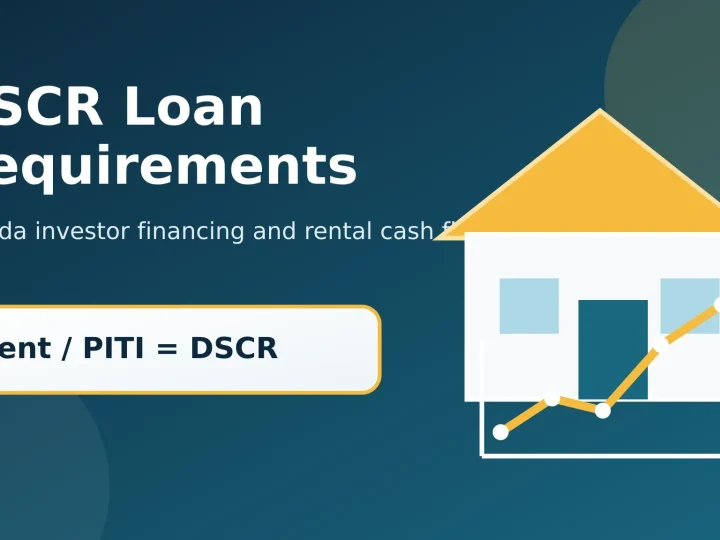
So, what does that ratio part of the name actually mean? The Debt Service Coverage Ratio (DSCR) is a simple calculation lenders use to measure a property’s ability to pay its own bills. It compares the property’s net operating income (your rental income minus operating expenses) to its total debt service (the principal and interest on the mortgage).
Think of it this way: a DSCR of 1.0 means the property generates exactly enough income to cover its debt payments, breaking even each month. Lenders, however, want to see a cushion. Most look for a DSCR of 1.25 or higher, which shows that the property brings in 25% more income than needed to cover its mortgage. This gives them confidence that the investment is financially sound.
DSCR Loans vs. Traditional Mortgages: What’s the Difference?
The biggest difference between a DSCR loan and a traditional mortgage is the underwriting process. With a conventional loan, the lender’s primary focus is on you, the borrower. They analyze your personal income, credit history, and debt-to-income ratio to assess risk.
DSCR loans flip the script. The property itself is the main character in this story. Lenders underwrite the loan based almost entirely on the property’s cash flow, not your personal income. This is a huge advantage for self-employed investors, entrepreneurs, or anyone with a growing portfolio. Because the loan focuses on the property’s performance, it’s an ideal solution for those who hold rental properties in an LLC or want to qualify based on their investment’s merit alone.
What Are Typical DSCR Loan Rates?
When you start looking into DSCR loans, one of the first questions you’ll have is about interest rates. It’s helpful to know that DSCR loan rates are typically a bit higher than what you might see for a conventional primary home mortgage. This is because lenders are basing the loan entirely on the property’s income potential, not your personal salary. They take on a different kind of risk, and the rate reflects that.
The exact rate you’re offered will depend on several things, like your credit score, the property’s cash flow, and the size of your down payment. Think of it like this: the stronger the investment looks on paper, the more attractive the rate a lender can offer you. While the rates can fluctuate with the market, they generally fall within a predictable range for different types of properties. Understanding these typical ranges is a great first step in figuring out if a DSCR loan is the right fit for your next investment property mortgage.
Rates for Residential Investment Properties
For residential properties, which include single-family homes, duplexes, and small multi-family buildings (up to four units), DSCR loan rates are quite competitive. You can generally expect to see rates ranging from the mid-6% to high-8% range. Of course, this can change with market conditions. If you have a strong credit profile and the property generates excellent cash flow, you might even secure a rate in the low 6% range. These loans are perfect for investors looking to expand their portfolio of rental homes without having to document their personal income for every single application.
Rates for Commercial Properties
When you move into the world of commercial properties, like office buildings, retail centers, or larger apartment complexes, the DSCR loan rates tend to be higher. Typically, you’ll find rates for commercial properties falling somewhere between 7.25% and 10.75%. The increase reflects the added complexity and perceived risk associated with commercial real estate. These properties often involve larger loan amounts and more intricate lease agreements, so lenders adjust their rates accordingly. It’s a different ballgame than residential investing, and the financing reflects that reality.
How Do DSCR Rates Compare to Traditional Mortgages?
So, how do these rates stack up against a traditional mortgage for an investment property? DSCR loan rates are usually slightly higher. For comparison, a conventional investment property loan might have rates between 5.8% and 7%. The key reason for this difference is the underwriting process. With a DSCR loan, the lender focuses solely on the property’s ability to generate enough income to cover the debt. Since they aren’t verifying your personal income, it’s a trade-off. You get a streamlined, asset-based approval process in exchange for a slightly higher interest rate.
What Factors Affect Your DSCR Loan Rate?
When you apply for a DSCR loan, lenders look at several key pieces of information to decide what interest rate to offer you. Unlike a traditional mortgage that focuses on your personal income, a DSCR loan is all about the investment property’s potential. Think of it as the property applying for the loan, not you.
Understanding the main factors that influence your rate can help you prepare your deal to look as attractive as possible to lenders. It’s not just about one number; it’s about the complete picture of the investment. From the property’s cash flow to your down payment, each element plays a role in determining the final terms of your loan. Let’s walk through the four biggest factors that will shape your DSCR loan rate.
How Your Property’s DSCR Impacts Your Rate
The debt service coverage ratio itself is the single most important factor. This number tells the lender exactly how much of the property’s income is available to cover its mortgage payments. A higher DSCR signals a healthier, more profitable investment, which means less risk for the lender.
Generally, a DSCR of 1.20 or higher is considered good, showing the property generates 20% more income than needed to pay its debts. If you can achieve a ratio of 1.30 or more, you’ll likely be offered even better interest rates. On the other hand, a ratio closer to 1.00 indicates a tighter cash flow, which lenders see as higher risk, often resulting in a higher interest rate.
The Role of Your Credit Score and Finances
While DSCR loans don’t require you to verify personal income, your financial history still matters. Lenders will look at your credit score to gauge your reliability as a borrower. A strong credit score demonstrates a track record of managing debt responsibly, which gives the lender confidence that you’ll handle the investment property mortgage payments, even if the property experiences a temporary vacancy.
Think of it as a character reference. While the property’s income is the primary qualifier, your credit score helps the lender trust that you are a dependable partner in the investment. A higher credit score can often help you secure a lower interest rate.
Why the Loan-to-Value (LTV) Ratio Matters
The loan-to-value (LTV) ratio compares the loan amount to the appraised value of the property. It’s directly tied to your down payment. The more money you put down, the lower your LTV, and the more “skin in the game” you have. Lenders see a lower LTV as a sign of commitment and lower risk.
For example, putting 30% down gives you a 70% LTV, which is much more appealing to a lender than a 20% down payment (80% LTV). As a result, a lower LTV will almost always get you a better interest rate. It shows the lender that you are sharing a significant portion of the financial risk.
How Property Type and Location Play a Part
Not all investment properties are viewed the same way by lenders. The type of property you’re financing plays a big role in determining your rate. Lenders often see residential properties, especially multifamily units like duplexes or small apartment buildings, as less risky than commercial properties. That’s because income from a multifamily property is diversified across several tenants.
In contrast, a single-tenant retail store or a hotel carries more risk. If that one tenant leaves, the income stream disappears entirely. Location is also critical. A property in a strong, stable rental market is a much safer bet than one in an area with high vacancy rates, and your rate will reflect that.
How to Qualify for a DSCR Loan
Qualifying for a DSCR loan is a different ballgame compared to getting a traditional mortgage. Instead of scrutinizing your personal pay stubs and tax returns, lenders focus almost entirely on the investment property’s ability to generate enough income to cover its own mortgage payments. This unique approach makes it a fantastic tool for real estate investors looking to expand their portfolios. If you have a promising property, you’re already on the right track.
Think of it this way: the property is applying for the loan, not you. Your role is to show the lender that the property is a sound investment that can pay for itself. To do that, you’ll need to meet a few key requirements related to the property’s cash flow, your credit history, and the down payment you can bring to the table. Let’s walk through exactly what lenders look for when you’re ready to secure an investment property mortgage.
Meeting the Minimum DSCR
The most important metric for this type of loan is the debt service coverage ratio itself. Lenders need to see that the property’s income is greater than its expenses. Most lenders require a DSCR of at least 1.20 to 1.25. In simple terms, this means the property should earn 20% to 25% more than what’s needed for its loan payments. A ratio of 1.0 means the income exactly covers the debt, leaving no room for error. The extra cushion gives the lender confidence that you can handle vacancies or unexpected repairs without missing a payment. A higher DSCR can often help you secure a better interest rate.
What to Expect for a Down Payment
Since the lender is basing the loan on the property’s performance, the down payment is a key part of the equation. You can expect to put down more than you would for a primary residence. Many DSCR loan programs require 20–25% down, and sometimes more depending on the property type, its DSCR, and your credit score. A larger down payment reduces the lender’s risk and demonstrates your commitment to the investment. It also lowers your loan-to-value (LTV) ratio, which can positively influence your interest rate and overall loan terms.
Credit Score and Financial History
While your personal income isn’t the main focus, your financial history still matters. Lenders want to see that you are a responsible borrower. You generally need a minimum credit score of 660 for DSCR loans. A higher credit score signals to lenders that you manage your finances well, which can lead to more favorable loan terms and a lower interest rate. They may also look at your overall financial picture, including any liquid assets or cash reserves you have, to ensure you can cover the down payment and handle any unforeseen property expenses.
The Application and Required Paperwork
The application process for a DSCR loan centers on property-specific documents. Lenders will require an appraisal to confirm the property’s market value and its potential rental income. This is a crucial step, as the appraiser’s opinion on market rent will be used in the DSCR calculation. You will also need to provide documentation related to the property’s income and expenses, such as current lease agreements, rent rolls, and recent operating statements. Having these documents organized and ready will help streamline the approval process and show the lender you’re a prepared and professional investor.
How Lenders Calculate Your DSCR
Understanding how lenders arrive at your DSCR is simpler than you might think. It’s not some secret formula locked away in a vault; it’s straightforward math that compares a property’s income to its expenses. Lenders use this calculation to confirm that your investment property can generate enough cash flow to cover its mortgage payments. The entire process boils down to two key numbers: the property’s Net Operating Income (NOI) and its Total Debt Service. By dividing the NOI by the Total Debt Service, lenders get the ratio that determines your eligibility for an investment property mortgage. Let’s walk through how each part of the equation is calculated so you can feel confident in your numbers.
Calculating Net Operating Income (NOI)
First up is the Net Operating Income, or NOI. This figure represents the property’s profitability before factoring in the mortgage. To figure out the property’s NOI, you take the money from rent and subtract all the necessary operating costs. Think of it as the property’s annual income after paying all the bills required to keep it running smoothly. These operating expenses typically include property taxes, homeowners insurance, maintenance and repairs, property management fees, and utilities. It’s the total rental income minus these essential costs that gives you the NOI, which is the top number in your DSCR equation.
Determining Total Debt Service
The second piece of the puzzle is the Total Debt Service. This is the total amount of money needed to pay the loan each year, which includes both principal and interest payments. Essentially, it’s your total annual mortgage payment for the property. Lenders will look at the proposed loan amount, interest rate, and loan term to calculate this annual figure. This number represents the “debt” your property needs to cover. For the lender, it’s crucial that your NOI is greater than your Total Debt Service, ensuring there’s a financial cushion. A strong NOI relative to your debt service shows that your investment is on solid ground.
Avoid These Common Calculation Mistakes
When you’re running the numbers yourself, it’s easy to make a few common mistakes that can throw off your entire calculation. One of the biggest slip-ups is not accurately accounting for all operating expenses. It’s tempting to be optimistic, but forgetting costs like landscaping or pest control can lead to an inflated NOI. Another frequent error is failing to consider vacancy rates. No property is occupied 100% of the time, so factoring in a realistic vacancy period (like 5-10% of the annual rent) gives you a much more accurate income projection. Getting these figures right from the start helps you and your lender see the true financial picture of your investment.
The Pros and Cons of DSCR Loans
DSCR loans are a fantastic tool for real estate investors, but like any financial product, they have their own set of advantages and disadvantages. Understanding both sides helps you decide if this is the right path for your investment strategy. The key is to weigh whether the flexibility and focus on property performance outweigh the potentially higher costs and stricter requirements. Let’s look at what you can expect.
The Pros: Why Investors Choose DSCR Loans
The biggest advantage of a DSCR loan is that it focuses on the property’s income potential, not your personal W-2. Lenders qualify you based on the rental property’s ability to generate enough cash flow to cover its debt payments. This is a game-changer for self-employed investors, entrepreneurs, or anyone with a complex income situation that doesn’t fit neatly into a traditional mortgage application. Because your personal debt-to-income ratio isn’t the main factor, you can often scale your portfolio more quickly. This makes DSCR loans a popular choice for financing investment property mortgages and growing your real estate holdings without hitting a wall with conventional lenders.
The Cons: What to Watch Out For
While DSCR loans offer great flexibility, there are a few trade-offs to consider. First, you should be prepared for a larger down payment. Most lenders require at least 20% to 25% down, which can be a significant amount of capital to have on hand. Second, the interest rates on DSCR loans are typically higher than those for conventional mortgages. Lenders view these loans as a slightly higher risk since they aren’t backed by your personal income in the same way. This higher rate is the price for the convenience and property-focused underwriting, so it’s important to run your numbers and ensure the property’s cash flow can still deliver the returns you’re looking for.
Understanding Prepayment Penalties and Other Costs
When you’re reviewing loan terms, keep an eye out for prepayment penalties. A prepayment penalty is a fee that some lenders charge if you pay off your loan ahead of schedule, often within the first few years. Lenders include these to ensure they earn a certain amount of interest from the loan. This is especially relevant if you plan to sell the property or refinance in the near future. Not all DSCR loans have them, but it’s a common feature. Always ask your loan officer about any potential penalties and read your loan agreement carefully. Understanding these details upfront helps you avoid surprises and make a fully informed decision that aligns with your long-term investment goals.
DSCR Loans vs. Other Financing Options
When you’re building a real estate portfolio, a DSCR loan is just one of many tools you can use. Understanding how it compares to other financing options helps you pick the right one for your specific deal and long-term strategy. Each loan type has its own strengths, whether you need speed, flexibility, or the ability to qualify without showing your personal pay stubs.
Choosing the right financing can make or break an investment. A traditional mortgage might be perfect for one property, while a DSCR loan is the clear winner for another. It all comes down to your financial picture, the property’s performance, and what you plan to do with it. For example, are you looking for a long-term rental or a quick flip? Do you have a steady W-2 income, or are you self-employed with a more complex financial profile? The answers to these questions will point you toward the best loan product. Let’s look at how DSCR loans stack up against some of the most common alternatives for real estate investors so you can make an informed decision for your next investment property mortgage. We’ll cover traditional loans, portfolio loans, and hard money loans to give you a clear picture of the landscape.
Traditional Investment Mortgages
The biggest difference between a DSCR loan and a traditional mortgage for an investment property comes down to one thing: how you qualify. Traditional loans focus heavily on your personal finances. Lenders will scrutinize your W-2s, tax returns, and debt-to-income ratio to approve you.
In contrast, DSCR loans focus on the rental property’s income rather than your personal income. This makes them a fantastic option for self-employed investors or those with multiple properties whose tax returns might not reflect their full cash flow. If your property generates enough rent to cover its mortgage payments and expenses, you have a good shot at qualifying for a DSCR loan, regardless of your personal employment situation.
Portfolio Loans
A portfolio loan is another great tool for seasoned investors. This type of loan allows you to finance multiple properties under a single mortgage instead of taking out individual loans for each one. It’s a way to streamline your finances and manage all your investment properties under one umbrella, with one monthly payment. This can be incredibly convenient if you own several rental homes.
While a DSCR loan is typically used for a single property, it offers a different kind of flexibility. By focusing on each property’s individual cash flow, DSCR loans give investors the freedom to acquire new properties one by one without having their personal income tied up in the qualification process. This can make it easier to scale your portfolio at your own pace.
Hard Money Loans
Hard money loans are the sprinters of the real estate financing world. They are short-term loans, often lasting just six months to a few years, and they are funded by private investors instead of banks. Investors typically use them for quick financing to purchase and renovate a property, often in a fix-and-flip scenario.
Because they are based on the property’s after-repair value (ARV) and not your credit, they can be funded very quickly. However, this speed comes at a cost. Hard money loans usually have much higher interest rates and fees. A DSCR loan, on the other hand, is a long-term financing solution designed for buy-and-hold investors who want a stable, 30-year mortgage for a cash-flowing rental property.
How to Get the Best DSCR Loan Rate
Securing the best possible rate on your DSCR loan comes down to presenting your investment as a solid and reliable opportunity. While these loans focus on the property’s income instead of your personal finances, lenders still look at the big picture to assess risk. A lower risk for them means a lower interest rate for you. By taking a few strategic steps before you apply, you can significantly improve your loan terms. Think of it as putting your property’s best foot forward. It involves fine-tuning its financial performance, polishing your own credit profile, and being smart about when and where you apply.
Many investors think that since the loan is based on the property, their personal financial habits don’t matter as much. But lenders are looking for responsible partners, and every piece of the puzzle contributes to their decision. A property with strong, consistent cash flow is obviously the main attraction, but a solid credit history and a well-timed application can be the difference between a good rate and a great one. Taking the time to prepare these elements shows lenders you’re a serious, organized investor, which can give you more negotiating power. Let’s walk through how you can take control of the process and land a rate that helps you maximize your returns.
Improve Your Property’s Cash Flow
Since a DSCR loan is built on your property’s ability to generate income, the single most effective way to get a better rate is to improve its cash flow. A higher DSCR tells lenders that your property can comfortably cover its debt payments, making it a less risky investment. Lenders often look for a DSCR of at least 1.20, but pushing it higher can give you access to more competitive rates. You can do this by finding ways to increase revenue, like adjusting rent to match current market rates or adding paid amenities. You can also trim operating expenses by installing energy-efficient appliances or renegotiating service contracts. A strong cash flow is the foundation of any successful investment property mortgage.
Strengthen Your Credit Profile
Even though your personal income isn’t the focus of a DSCR loan application, your credit history still plays a big part in determining your interest rate. Lenders see a strong credit score as a sign of financial responsibility. A higher score suggests you manage debt well, which reduces their perceived risk and can lead to a better offer. Before applying, take time to check your credit report for any errors, pay down high-balance credit cards, and make all your payments on time. These simple actions can have a meaningful impact, potentially saving you thousands over the life of your loan.
Shop Around and Time Your Application
Interest rates aren’t set in stone; they vary between lenders and can change daily based on market conditions. Don’t just accept the first offer you receive. Working with a mortgage broker gives you a major advantage, as we can shop your application around to a wide network of lenders to find the best terms. Timing is also key. Because mortgage rates fluctuate, it’s important to understand the current market trends. We can help you monitor the environment and choose the right moment to lock in your rate, ensuring you don’t miss out on a favorable opportunity. This expert guidance can make a huge difference in your long-term investment success.
What Market Trends Affect DSCR Loan Rates?
Your DSCR loan rate isn’t just about your property or your finances; it’s also influenced by the wider economic landscape. Think of it like this: the interest rate you’re offered is a reflection of what’s happening in the broader market. Just as the price of gas goes up and down based on global events, DSCR loan rates shift based on economic trends, Federal Reserve policies, and the overall demand from other investors.
Understanding these external factors can help you time your application and get a clearer picture of why rates are what they are. While you can’t control the economy, knowing what to watch for gives you a strategic advantage. It helps you see the full picture, so you can make a more informed decision for your next investment property mortgage. Let’s look at the three main market trends that have the biggest impact on DSCR loan rates.
Key Economic Drivers
One of the first things you’ll notice is that DSCR loan rates are typically a little higher than rates for a conventional mortgage on a primary home. There’s a simple reason for this. DSCR loans are unique because they focus on the property’s income potential, not your personal salary. Since the lender isn’t verifying your W-2s or pay stubs, they take on a different kind of risk.
This risk is priced into the interest rate. Lenders are essentially betting on your property’s ability to generate enough cash flow to cover the mortgage payments. This focus on property performance over personal income is what makes DSCR loans so valuable for investors, and the slightly higher rate is the trade-off for that flexibility.
The Fed’s Influence on Interest Rates
You’ve probably heard news reports about the Federal Reserve raising or lowering interest rates. These decisions create a ripple effect that touches almost every type of loan, including DSCR loans. The Fed’s actions on monetary policy are designed to help manage the economy, and they directly influence what lenders charge for money.
For example, if the Federal Reserve lowers its benchmark rate to stimulate economic activity, lenders can often borrow money more cheaply. They can then pass those savings on to you in the form of lower interest rates on products like DSCR loans. On the other hand, when the Fed raises rates to curb inflation, borrowing becomes more expensive for everyone, and DSCR rates will likely follow suit.
How Investor Demand Shapes the Market
The world of real estate investing operates on supply and demand, and DSCR loans are no exception. When the market is hot and many investors are looking to buy properties, the demand for DSCR loans goes up. This high demand can lead lenders to increase their rates. It’s a simple case of more people wanting a limited product.
Conversely, if the real estate market cools down or general economic uncertainty makes investors more cautious, demand for these loans might drop. In that scenario, lenders may offer more competitive rates to attract business. Watching trends in investor activity and even the performance of U.S. Treasury yields can give you clues about which way rates might be heading.
Is a DSCR Loan Right for Your Investment Strategy?
Deciding on the right financing is a huge part of a successful real estate investment. A DSCR loan can be a fantastic tool, but it isn’t a one-size-fits-all solution. The key is to look closely at your personal investment strategy, your financial situation, and the specific property you have in mind. This type of loan is designed for a very specific purpose: to finance properties based on their ability to generate income, not on your personal W-2. This distinction is what makes it so appealing to seasoned investors and those looking to scale their portfolios without hitting a wall with traditional lenders.
Before you move forward, it’s smart to ask yourself a few questions. Are you focused on long-term rental income and building wealth through appreciation and cash flow? Do you need to close quickly without the hassle of providing extensive personal income documents? Or is your goal a short-term flip where cash flow isn’t the primary metric? Answering these questions will help you determine if a DSCR loan aligns with your vision. Think of it as choosing the right key for the right lock; when the fit is perfect, it opens doors to new opportunities. We’ll walk through how to align the loan with your goals, calculate the true costs, and find a lender who gets it.
Align the Loan with Your Investment Goals
The main purpose of a DSCR loan is to help you acquire a property based on its cash flow from rental income. If your strategy is to buy and hold properties that generate steady monthly revenue, this loan could be a perfect match. It allows you to scale your portfolio based on the performance of your assets rather than your personal salary. This is especially helpful for self-employed investors or those who want to grow their real estate holdings quickly. For anyone building a portfolio of investment property mortgages, the DSCR loan is a powerful and popular option.
Calculate the Total Cost of Borrowing
Beyond the interest rate, it’s crucial to understand the full financial picture of a DSCR loan. You’ll need to be prepared for a significant down payment. Many DSCR loan programs require 20–25% down, and sometimes more depending on the property type and your credit score. You should also factor in closing costs, origination fees, and any potential prepayment penalties, which can affect your profits if you decide to sell or refinance sooner than planned. Taking the time to calculate these expenses will give you a clear idea of your true return on investment and ensure the property’s cash flow is strong enough to support the debt.
Find the Right Lender for You
Finding a lender who understands your goals is just as important as finding the right property. Different lenders have different requirements. For instance, most lenders want to see that the property’s income can cover at least 120% of its debt payments, which translates to a DSCR of 1.20 or higher. Working with an experienced mortgage broker can make all the difference. We can connect you with lenders who specialize in investment properties and find flexible terms that fit your specific scenario. This partnership helps ensure you get a competitive rate and a loan structure that supports your long-term success.
Start Your Home Loan Journey Today
Get pre-qualified in minutes and take the first step toward owning your dream home with expert guidance.
Frequently Asked Questions
Do I really not have to show any personal income documents? That’s the main appeal of a DSCR loan. For the most part, lenders focus on the property’s income potential instead of your personal pay stubs or tax returns. However, they will still look at your credit score and may want to see that you have cash reserves (or liquid assets) to cover the down payment and a few months of mortgage payments. Think of it as the property qualifying for the loan, with you as the responsible manager.
Can I get a DSCR loan for my first investment property? Absolutely. DSCR loans can be a great entry point for new investors, especially if you’re self-employed or have a financial profile that doesn’t fit the traditional mortgage box. As long as the property you’re buying can generate enough rental income to meet the lender’s DSCR requirement (usually 1.20 or higher), you have a strong chance of qualifying, even without a long history of property management.
How is the rental income calculated if the property is currently vacant? This is a common situation, and lenders have a standard way to handle it. They will order a professional appraisal of the property, and part of that report will include a “comparable rent schedule.” The appraiser analyzes similar rental properties in the area to determine a fair market rent for your property. This projected rental income is then used to calculate the DSCR.
Why are DSCR loan rates often higher than for a regular mortgage? The slightly higher interest rate is the trade-off for the loan’s flexibility. With a traditional mortgage, lenders base their decision on your stable, documented personal income, which they see as lower risk. Since a DSCR loan relies solely on the property’s performance, lenders take on a different type of risk. The higher rate helps offset the fact that they are not verifying your personal ability to pay the loan.
What happens if my property’s income drops after I get the loan? Once your loan is closed, your interest rate and monthly payment are set for the term of the loan, just like any other mortgage. The lender won’t re-evaluate your DSCR every year. It’s your responsibility as the investor to manage the property effectively and maintain positive cash flow. This is why lenders look for a DSCR above 1.0 in the first place; that built-in cushion is designed to help you weather temporary vacancies or unexpected expenses.